Shiznit Plan
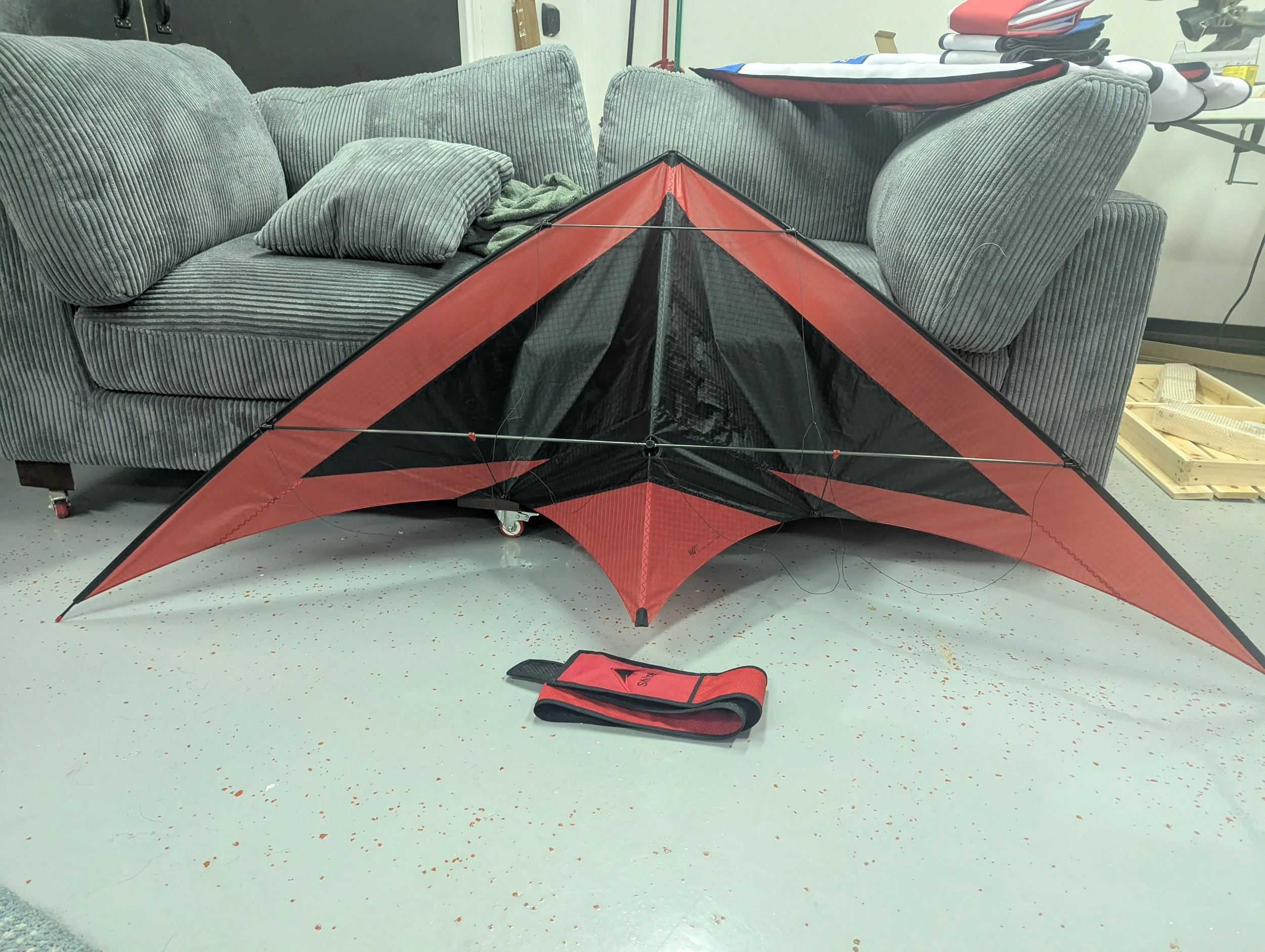
Shiznit
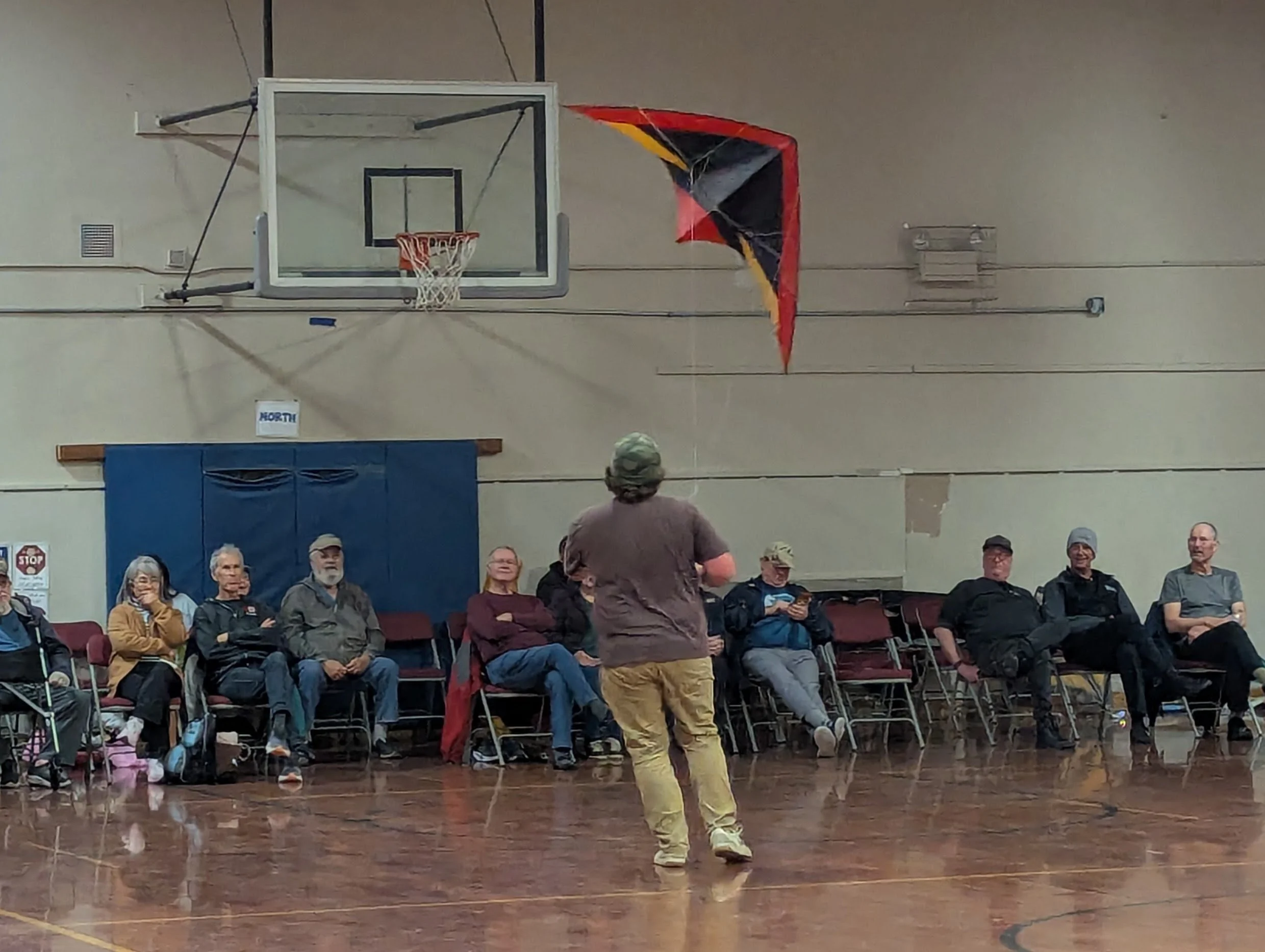
The Shiznit is my first dual line design. It is built to fly indoors with relative ease while being agile enough to provide access to wide range of tricks. The Shiznit's design was finished in the beginning of 2022 after over a year of designing and prototyping. The kite is originally derived from the iTrix, a discontinued indoor dual line made by Wolfgang Seibert. The Shiznit has changed much from there as I changed many aspects of the kite's shape, framing, and overall construction. The goal was to build a kite that can be a go-to kite for indoor kiting performances and that can be great fun both indoors, and outdoors in little or no wind.
License
This plan is free for non-commercial use. If you would like to buy a Tempest, I have them available for order on my Shop.

Creative Commons Attribution-NonCommercial 4.0 International License
While these plans are made available for free, donations are very appreciated:
Materials
- 1 yards of Icarex (alternative ripstop may be substituted, but Icarex is highly recommended)
- 3 yards 1"-wide 1.5oz Nylon
- Nose Webbing
- 1/8" Grosgrain ribbon - Used to tension the wing tips
- ¼” Double sided tape
- Bonded Polyester thread
- Other thread may work, but I’ve found this to work best when sewing through tape
- Fittings
- 2 Speader Standoff Connectors
- 1 Sliding Swiveling Cross Fitting
- 2 Sail Stay Standoff Connectors
- 5 Wingtip Caps (3 for the leading edges and spine in the nose pockets, 1 in the tail pocket on the spine, and 2 slightly large ones for tensioning the wing tips)
- 4 Spreader Leading Edge Connectors (2 to fit the upper leading edge and upper spreader, and 2 to fit the lower leading edge and lower spreader)
- Frame
- 2 2mm Fiberglass @ 27cm long
- 3 3mm Pultruded Carbon, 2 @48" long, 1 @ 31" long
- 1 .088" (4.75mm) Pultruded Carbon @ 48" long
- 60lb Spectra bridle line
Recommended Tools
- 48" metal ruler
- Metric + Imperial
- 18" metal ruler
- Metric + Imperial
- Bone folder
- Clear protractor
- Fabric scissors
- Thread scissors
- Soldering iron
- Lighter
- Sewing Machine
- Must support a straight, single-step zig-zag, and multi-step zig-zag stitches.
- If it doesn't have a built in walking foot, get a walking foot attachment
- 90/14 microtex sewing needles
- Aluminum tape (for hard templates)
- Ram Board (for hard templates)
- Wire threading tool
- Mechanical pencil
- Fabric weights
- A heat-proof working surface, like glass or metal
- Dremel with abrasive wheels
- Mini cut-off saw
- Face mask
Plans
Bridle
My bridle plans are based on using 60lb Spectra bridle line.
Framing
The leading edge and lower spreader are both 48" long pieces with no ferruling.
The spine should be about 30" long, but cut it to fit. Cut it a bit long, then trim it down as needed until it fits between the nose and tail pockets with a bit of flex. The spine should be sewn with a slight curve, so you want the spine spar to curve to match.
Colors
You can use KitePaint.com to plan your colors.
Previous Builds