
K146 - Tempest #9
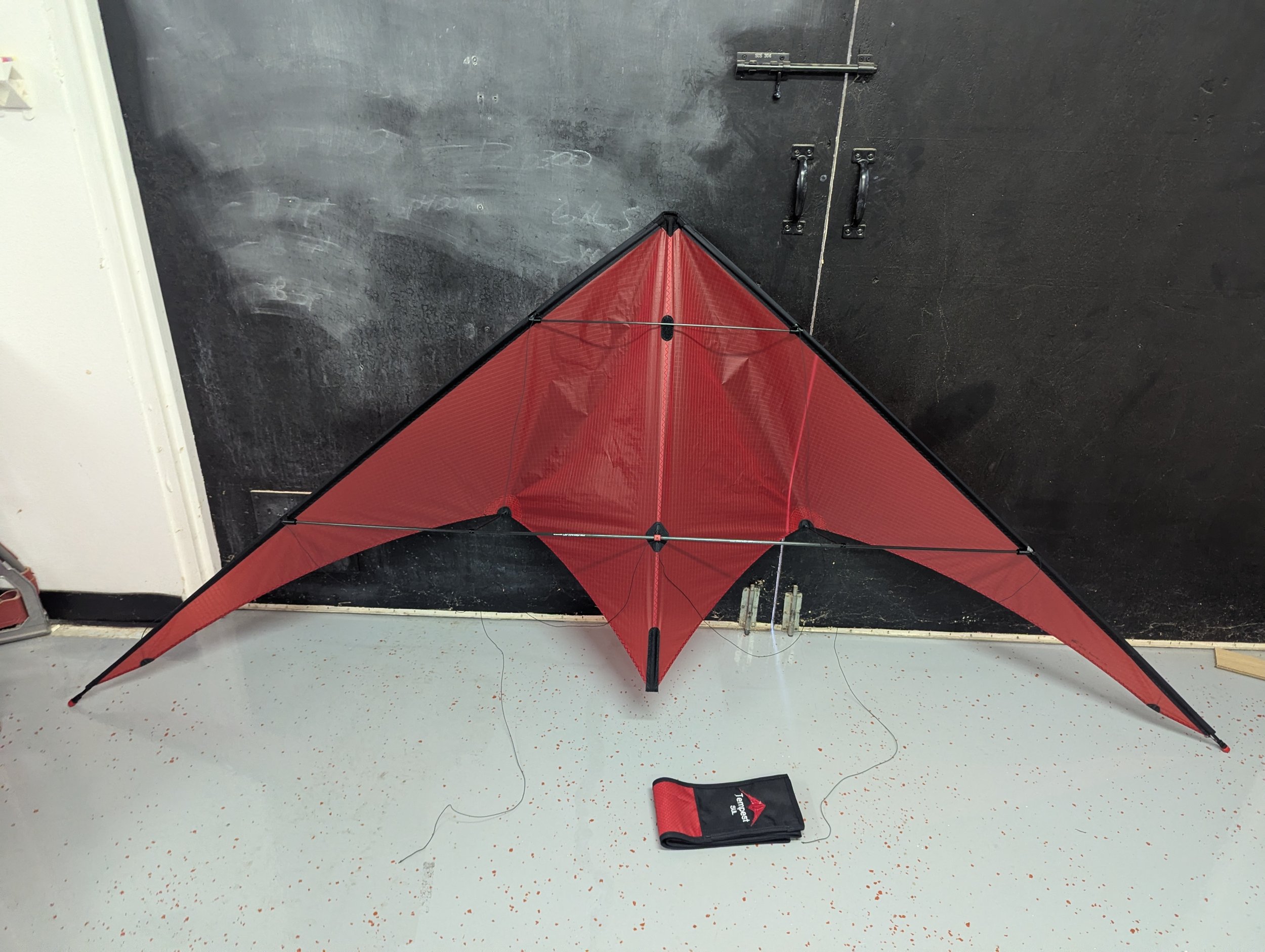
This is a Tempest SUL; a build following my successful prototype. I was very happy with how the prototype flew when I brought it out to WSIKF. Compared to the ULs or previous SUL prototypes, it maintained pressure much better and had a tendancy to hang in the air rather than drop altitude all of the time. It was also still quite trickable, considering.
This build is 1 of 3 in a batch. Unfortunately, there was a delay getting the appropriate Skyshark spars, so I only had enough 2PTs to fully frame out 1. The other two will be completed once I finally get the rest of the spars in the mail. I wanted to at least get one done so that I can use this and the SUL prototype to fly pairs with Paul DeBakker at the upcoming competition in Weifang, China.
Applique (or lack thereof)
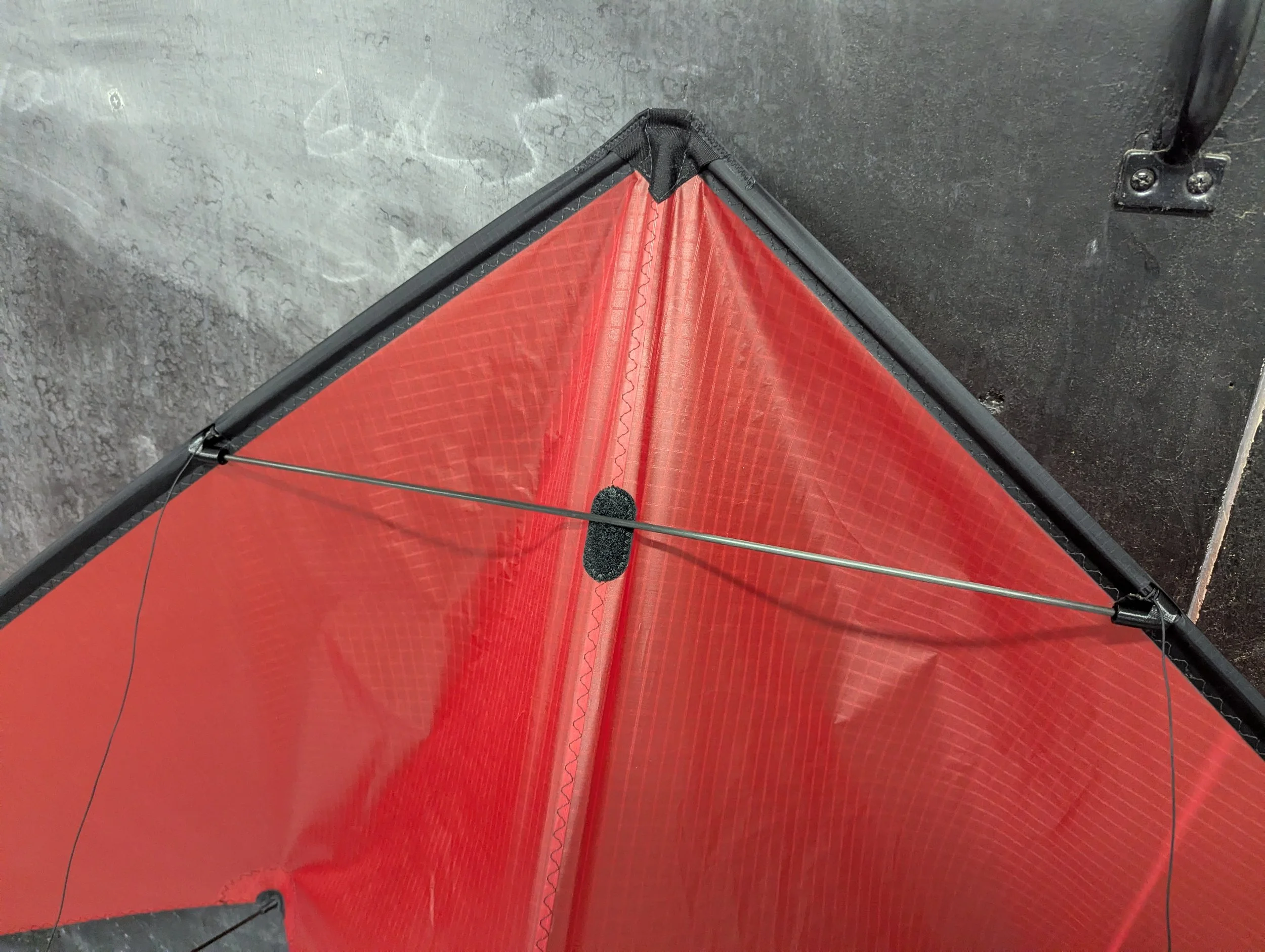
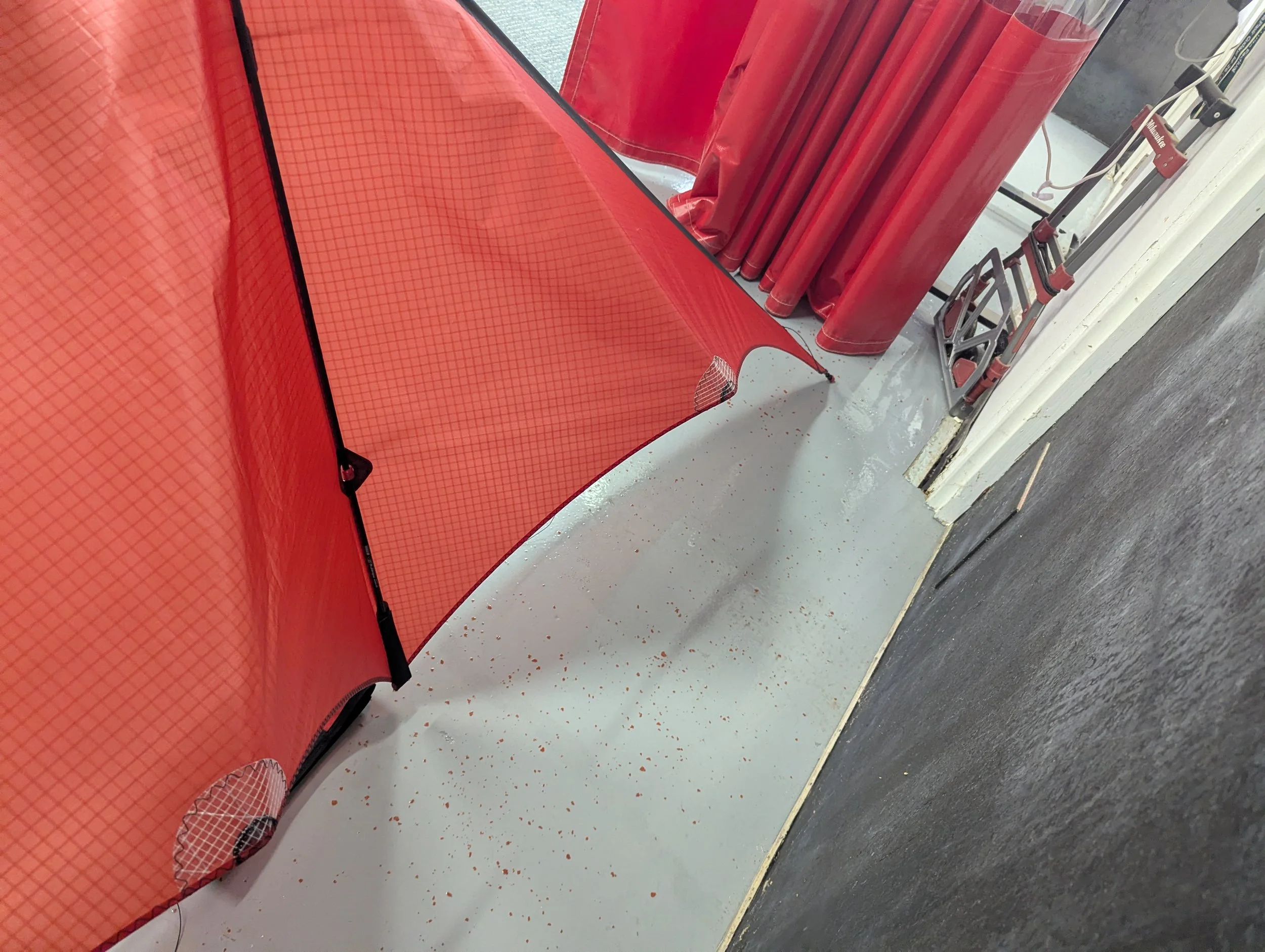
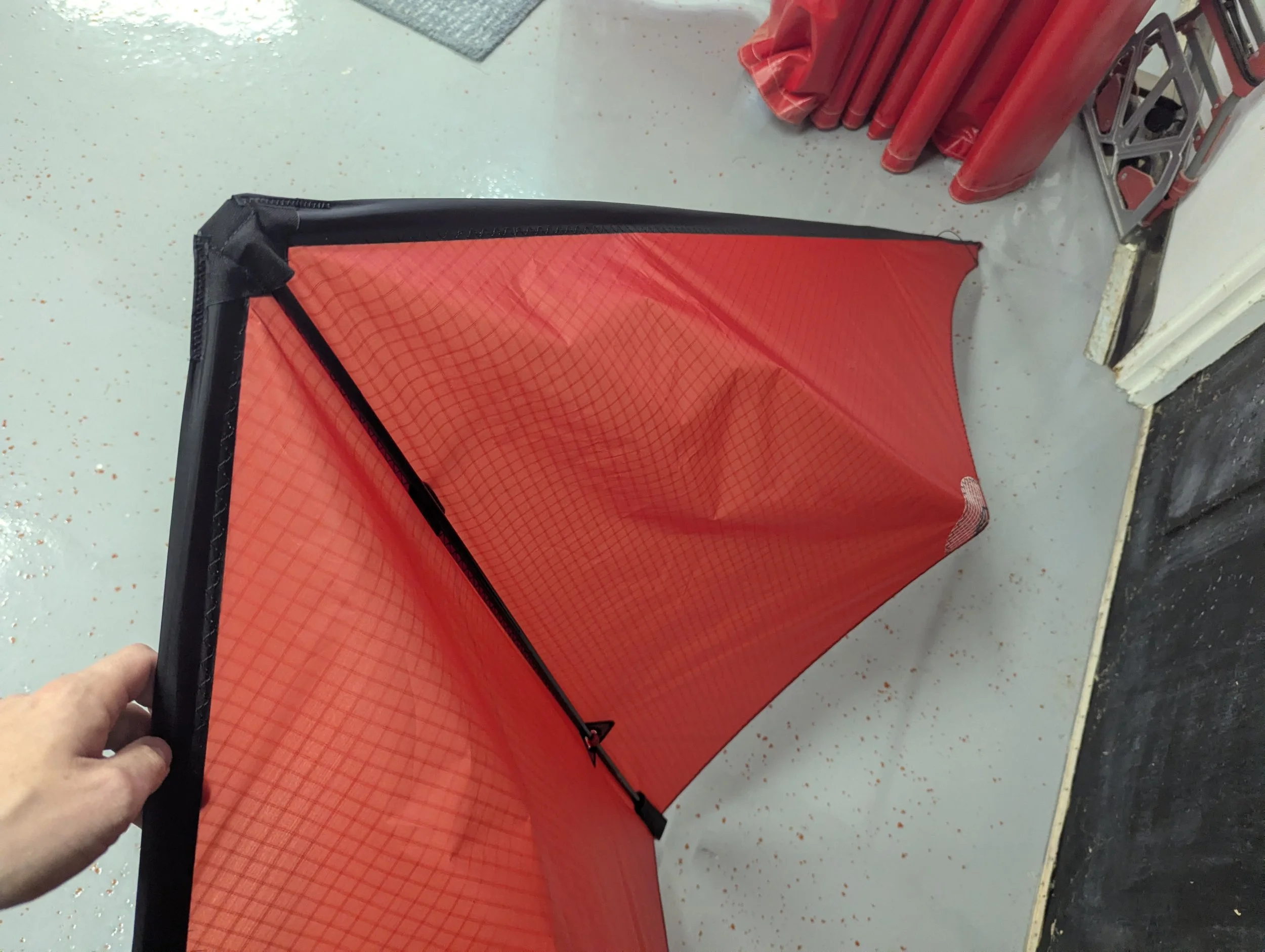
The most noticeable thing about these SULs is the lack of graphics. To cut weight, these are made with a single piece of icarex on each side, with a rolled seem along the spine.
Shallow bridle
The SUL features a different bridle than the other versions of Tempest. This bridle is much more shallow. I like the original deep bridle in that I think it helps make the tempest quite stable under pressure, because the bridle doesn’t pull the frame inward as much. However, such a deep bridle means a lot more line, which means a lot more weight and drag. For the SUL, I redesigned the bridle with the goal of making it just short enough to warrant omitting the keeper line, ie the in-haul is too short to snag on the tail, so a keeper line is not needed.
No tail weight
And to cut weight, there is no tail wight in the SUL at all.
Replaced most dacron with nylon
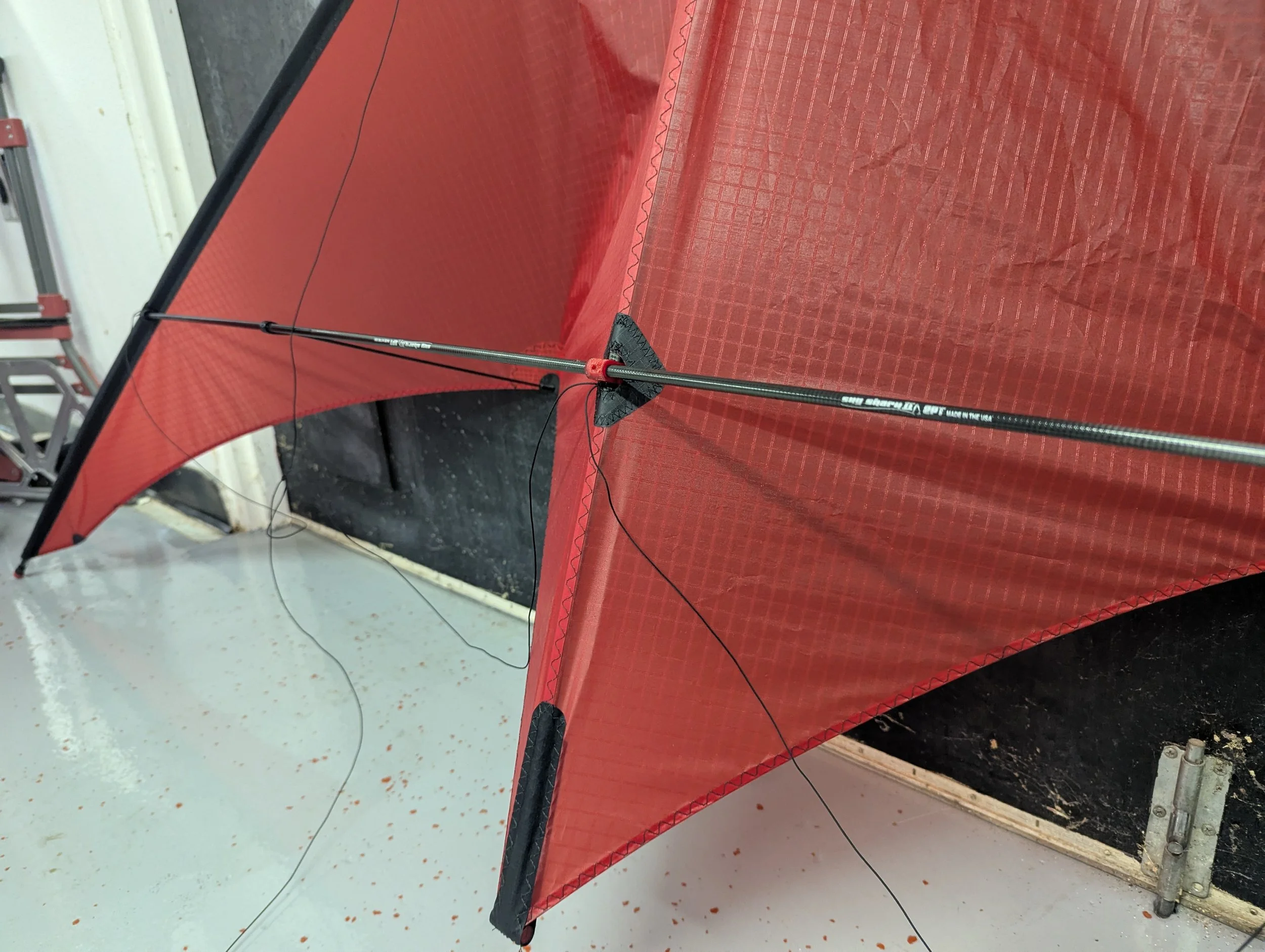
The leading edge, tail and center-T reinforcements are all nylon.
Reduced reinforcement
The mylar around the standoffs is reduced, and there is no mylar along the spine or wingtips.
Folded trailing edge hem
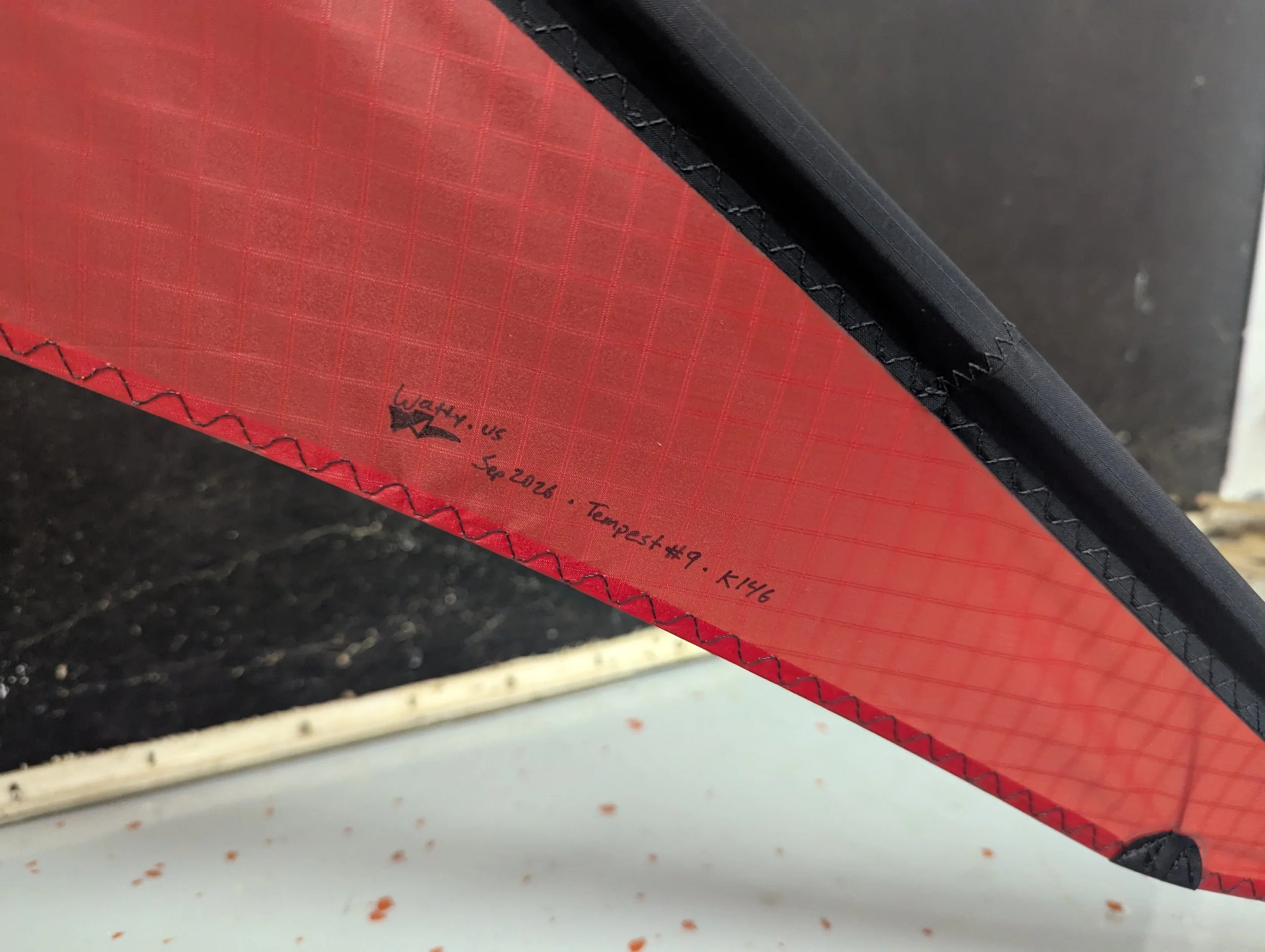
Instead of folding nylon tape around the trailing edge for the hem, the sail is made with an extra 1/2” of fabric along the trailing edge, which is folded over twice and sewn. The Icarex is lighter than the nylon, and there are now 3 layers along the trailing edge instead of 1 layer of icarex and 4 layers of nylon.
Slightly shorter standoffs
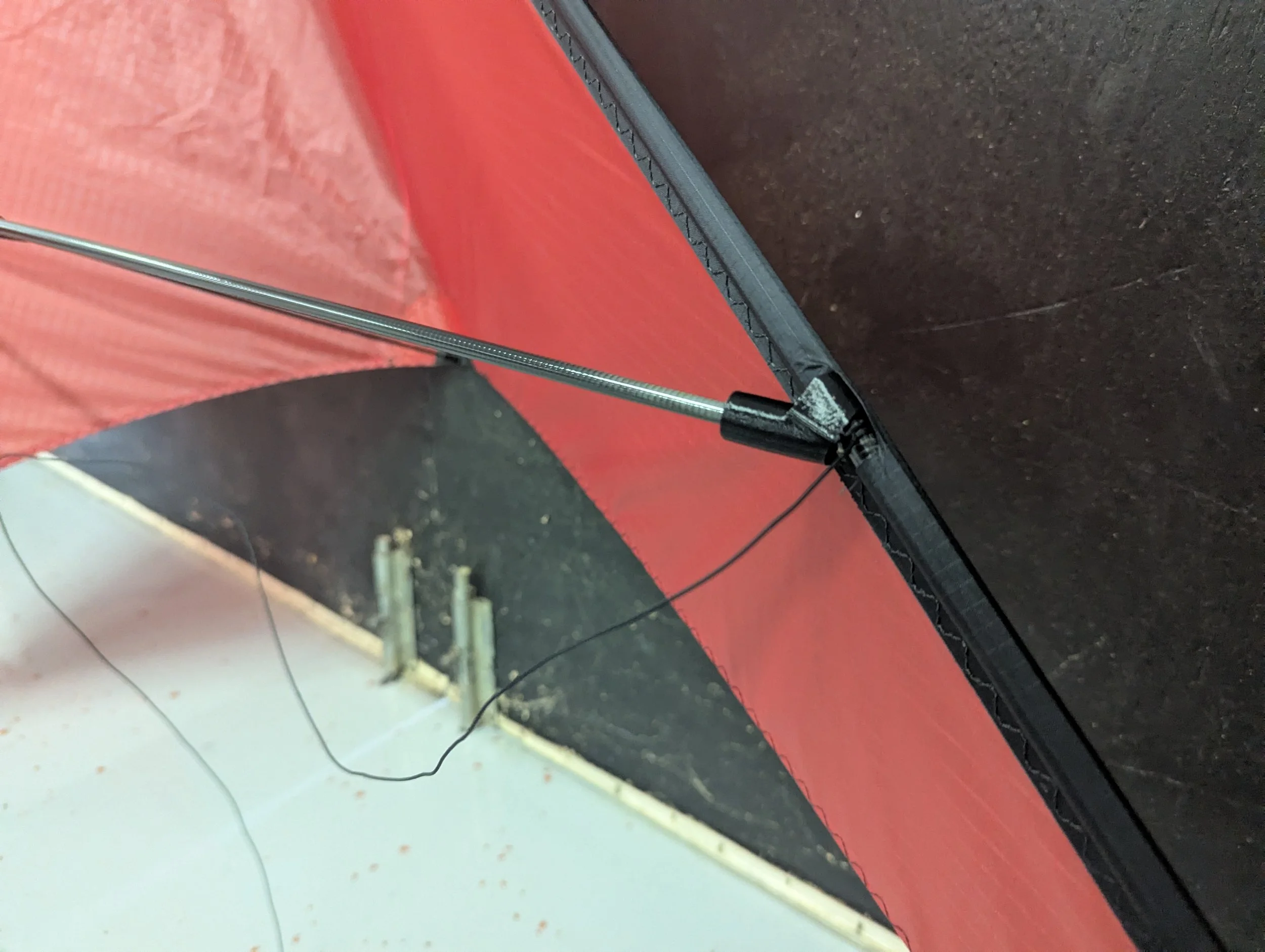
By using Skyshark 2PTs for the lower spreaders, the 3mm fiberglass standoffs overpower the spreader and cause extra stress on the 2PT. The standoffs are intentionally extra long in other versions of Tempest to make the standoffs curve, reducing their resistance. Rather than going to a thinner standoff, I cut the standoffs a bit shorter so they place less pressure on the spreader.